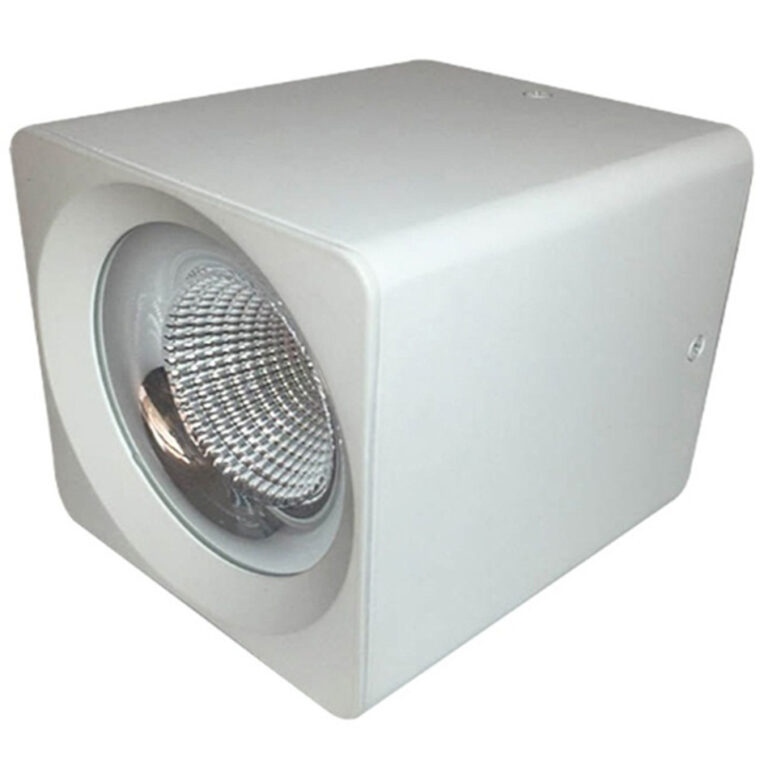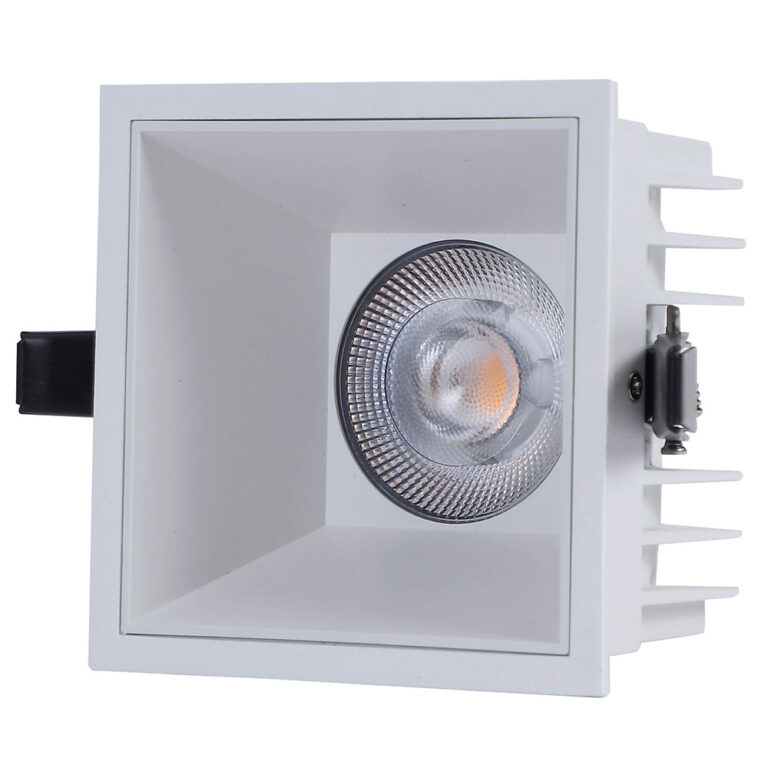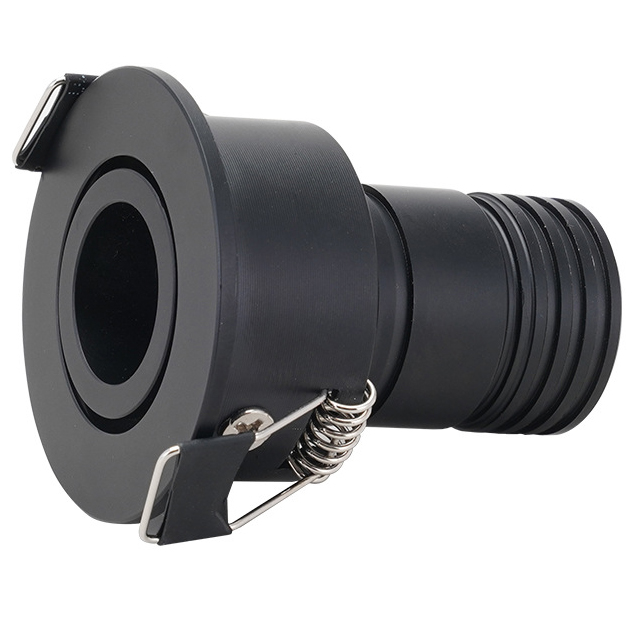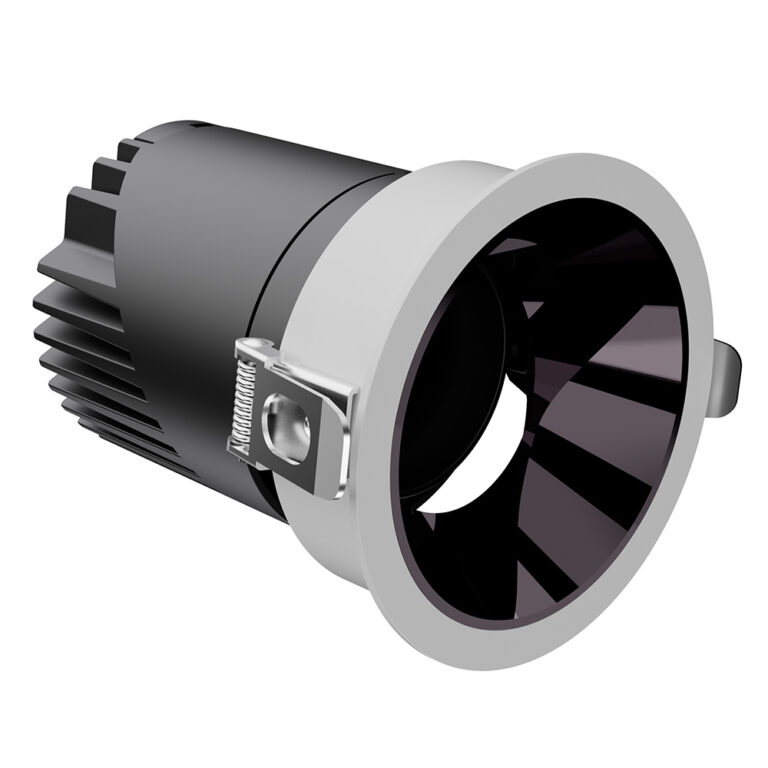



The FC-D1 is a 12W recessed LED downlight built for standard ceiling cutouts of 85-90mm. It is used in homes, offices, retail, and hospitality spaces where a clean flush fixture with good color rendering is wanted.
Light source
The fixture uses a CREE COB (chip-on-board) LED. Color rendering index is above 90, which keeps fabric, paint, and merchandise colors looking correct. This matters in galleries, retail displays, and kitchens where color judgment is part of the work. Color temperature is set at order time from four options: 2700K, 3000K, 4000K, or 5000K. 2700K and 3000K suit homes and restaurants; 4000K and 5000K suit offices and work areas.
Power and input
Wattage is 12W. Input voltage accepts 220-240VAC or 110-277VAC, so the same fixture works across regions. There is no external driver box; the electronics sit inside the housing. Because the driver is built in, there is nothing extra to mount in the ceiling cavity — useful for retrofits where cavity space is tight.
Beam and optics
Three reflector lenses are available: 20°, 36°, and 60°. The 20° lens gives a tight pool for task lighting or accent on a specific object, such as a product on a shelf or a picture on a wall. The 36° lens is the middle ground for general room illumination and is the most common choice. The 60° lens spreads light wide for corridors, lobbies, and open areas. The recessed mounting keeps the source set back in the ceiling, which limits glare compared with a surface-mounted fixture at eye level. Reflectors are part of the fixture at order time; the beam angle is not field-swappable.
Construction
The body is aluminum. It doubles as the heat sink, so cooling is passive with no fan and no noise. The IP42 rating covers indoor use, protecting against small objects and water spray. Housing measures 98mm in diameter and 94mm deep, with a cutout size of 85-90mm. Check the ceiling cavity depth before ordering — the fixture needs roughly 94mm of clearance above the ceiling board, and the housing should not sit pressed against insulation, or heat builds up and shortens LED life.
Dimming and control
Four control options are available, chosen at order time: Triac dimming works with standard trailing-edge wall dimmers; DALI suits buildings with a control bus; Casambi is a Bluetooth-based wireless option controlled from a phone app; 0-10V works with analog dimming systems. An emergency version is available with a backup supply so the fixture stays lit during a power outage — the emergency option needs separate wiring, so factor that into the install. Because the control type is fixed when the fixture is built, match the option to the system already in the building before ordering.
Installation and maintenance
Installation is a drop-in job on a ceiling already cut to size: connect the supply, push the housing into the cutout, and the clips hold it in place. The LED source has no user-replaceable parts, and the sealed housing means there is no routine cleaning inside. Wipe the lens with a dry cloth if dust builds up; keep water away from the fixture. If the ceiling is being installed new, cut the hole to 85-90mm and leave cavity clearance above.
Typical use cases
In homes the fixture lights kitchens, bedrooms, and hallways with a flush ceiling look. In offices it provides high-CRI general light with 36° or 60° lenses. Retail uses the 20° lens for product spotlights. Hotels and cafes use the warmer CCTs with Casambi for scene control. Museums and galleries take advantage of the CRI above 90 for artwork. For corridors and lobbies, the wide beam covers the floor without bright spots, and the emergency option keeps paths lit during an outage.