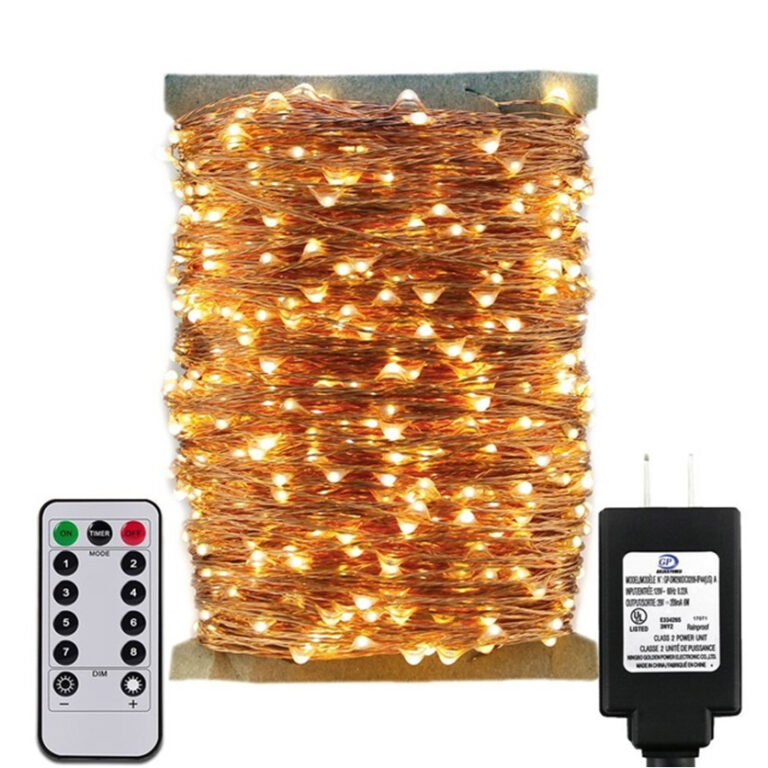
The ILED-CS-A S12 is the solar fairy string for the runs the standard lengths miss: the long fence line, the full hedge, the driveway and the roofline that a 5 or 10-meter string would need three connections to cover. The range runs 20, 30 and 50 meters — 200, 300 and 500 LEDs — with custom lengths built by the factory to the measured run.
The three lengths, and custom
The S12 20 runs 20 meters with 200 LEDs on 10cm spacing. The S12 30 runs 30 meters with 300. The S12 50 runs 50 meters with 500 — the length that wraps the large tree and runs the long fence in one piece. All three space the LEDs 10cm apart, the density that reads as a continuous line of light, and the factory builds custom lengths to the measured display so a project orders to the measurement instead of joining short strings.
The solar side
The panel is a 1.2V 200mA unit — the largest in the family — charging the NI-MH 1200 battery through the day. Six hours of daylight charges the string for 6 to 8 hours of light, per the specification, and the working current is a steady 45mA. The photocell does the switching: the string charges through the day, lights at dusk and goes off at dawn. On the thin-sun weeks, the timer keeps the discipline — set it once and the string spends its 6 hours on the evening that matters.
The two-metre cable
The cable between the panel and the string is the quiet point of the design: the panel needs the sun, the string often needs the shade — the fence’s north side, the branches under the canopy. Two metres of lead let the two halves sit where each works, instead of forcing the panel to live where the display is. Set the panel on the stake or the wall with the sun, run the lead to the string, and the geometry of the garden stops being a constraint.
Colours, modes and control
Nine colours: white, warm white, yellow, green, red, blue, pink, purple and multicolour, ordered per theme. Constant lighting and one flash mode are standard, with eight flash models available as options. Control comes from the button switch on the panel for the basics, and the model table lists the remote with each length — set the colour, the mode and the timer from whichever the install uses.
Outdoors through the season
The string is IP65 rated — dust-tight and protected against water jets — and the wire is PVC per the specification, coiling back after the season. Keep the panel connections sheltered and the panel face clean; a dusty panel charges like a shaded one, which is the maintenance nobody tells you about until the August display dims.
Dónde se utiliza
Long fences and driveways, where the 30 and 50-meter lengths run the line in one piece. Large trees and rooflines, wrapped from the trunk through the branches. Garden borders and hedge runs, marked with the string on the guide wire. Christmas displays across the whole frontage. And the wedding and event structures, where the custom lengths match the build and no generator follows the arbor. In each of these the pattern holds: the panel goes where the sun lands, the string goes where the display is, and the photocell and the timer do the nightly work without anyone remembering to switch anything.
Planning the long run
Three decisions shape the order: the length against the measured run, the colour against the theme, and the panel position against the sun. Measure the fence, the roofline or the hedge once, order the standard length that matches or the custom build that fits exactly, and place the panel where the daylight actually lands — the open part of the garden, the south-facing edge, the roof of the shed. The 2-metre lead crosses from the panel to the string, and the run starts where the display starts rather than where the socket happens to be.