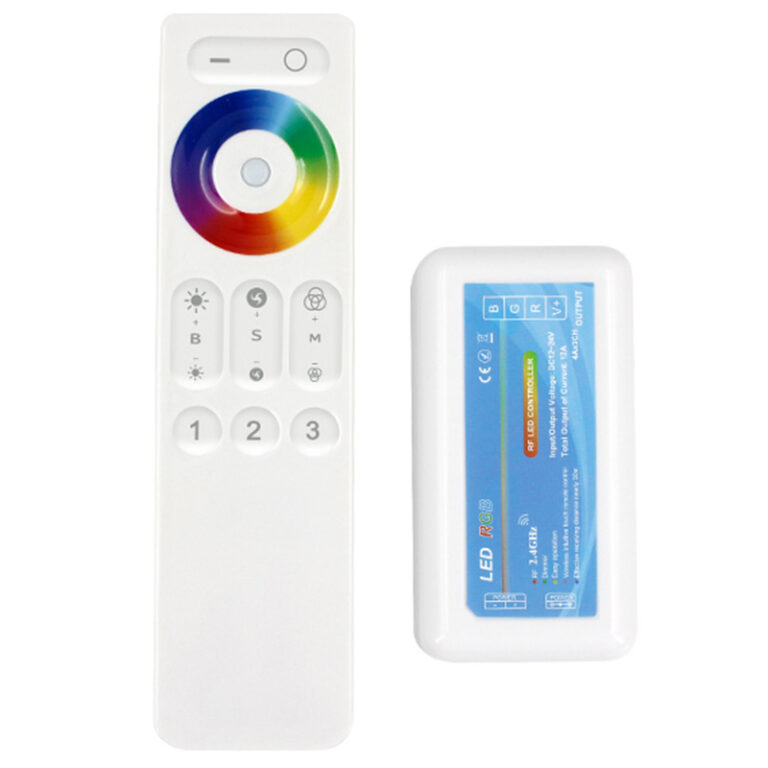



The FEL-CP4 is the trigger-input pixel controller for the RGB and RGBW runs — the CP1’s inline body with the trigger function and the OLED added. Up to 1,000 pixels at 10 amps, 54 adjustable lighting modes, 8 built-in timing settings, and the feature the name carries: an activation-voltage trigger that takes 5-24V from a switch, a sensor or a relay and sets the run in motion. The supply ranges DC5-24V at up to 240 watts on 24V, the OLED display runs the operation from the unit, and the two-channel switch support covers the paired inputs. The body is the same inline 135×30×20mm strip at 61g — lighter than the CP1, mounted in the run.
Up to 1,000 pixels at 10 amps
The controller drives up to 1,000 pixels on the run, at a load ceiling of 10 amps — 50 watts of 5V strip, 120 of 12V, 240 of 24V. That is five to six times the pixel capacity of the CP2’s single DMX port, in a body that still hides in the cove or the joinery. The supply ranges DC5-24V, matched to the strip, and the load moves with the voltage the run carries.
The activation-voltage trigger
The trigger function takes an activation voltage — 5 to 24V — and the run responds when it arrives. Wire the input to the switch, the sensor or the relay that suits the build: the door contact fires the entrance sequence, the presence sensor brings the counter accent up, the alarm panel or the show relay starts the scene. The trigger voltage spans the same 5-24V range as the supply, so the control voltage comes off the same family of sources.
54 modes and 8 timing settings
The effects library runs to 54 adjustable lighting modes — the looks cycled from the unit or set once and left. The 8 built-in timing settings put the run on a clock: the sequence plays at the hours the install needs, which is what the unattended windows and the after-hours frontage ask for. Between the modes and the timings, the run holds a show without a controller in sight.
The OLED and the two-channel switch
The OLED display runs the operation from the unit — the mode, the timing and the settings read and set on the spot, which is what easy operation means at the inline scale. The two-channel switch support covers the paired inputs: two switch lines, two triggers, one controller. For the builds that want the colour run and the white run reacting to separate inputs, the channels are there.
Working envelope
Working temperature spans -20°C to +55°C, which covers the shop floors, the counters and the cabinets the controller lives in. The supply is DC5-24V at up to 10 amps, and the body is 135×30×20mm at 61g — the same inline envelope as the CP1, lighter still, tucked into the run with the OLED showing the state.
Où est-il utilisé ?
The controller earns its place on the builds that react: the entrance sequence that fires when the door contact closes, the counter accent that wakes with the presence sensor, the window scheme that runs its timing through the trading day and its evening look after close. Wherever the pixels should answer a switch, a sensor or a clock — not just a remote — this is the inline unit.
Where it sits in the range
The pixel range splits by control style. The CP1 is the RF-remote inline controller for the simple runs; the CP4 is this trigger-and-timing unit at up to 1,000 pixels — the same body with the brains added. The CP2 decodes one port of 170 RGB pixels off the DMX line, the CD1 adds the desktop DMX-and-SPI control with the scheduled playback, and the CA2 carries the Ethernet side with 16 pixel ports and 5,440 pixels. Pick by what the run should answer: a remote, a voltage, a clock or the network.